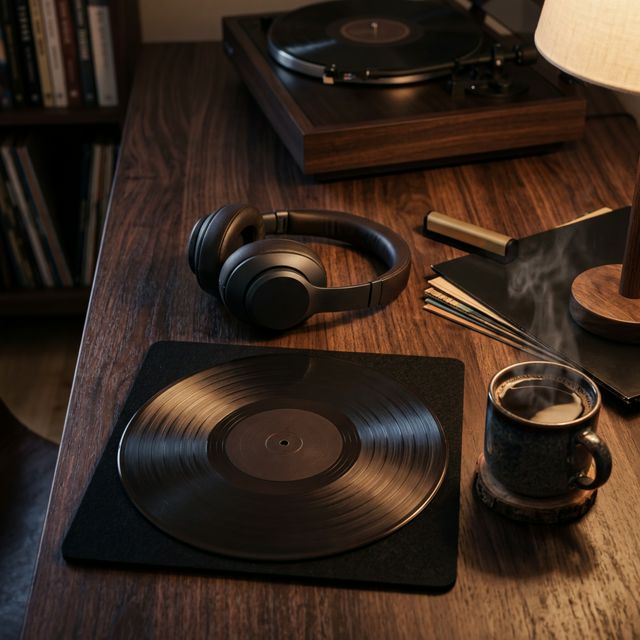
Premium headphones and vinyl records on a wooden desk, warm ambient music listening setup
🎧 Independent Music & Technology Guide

Your Complete Guide to
Digital Music Streaming

Expert articles on music streaming services, audio quality, playlist curation, and emerging music technology. Independent editorial content updated weekly.

📖 12 In-Depth Articles ⏱️ 20 min read 📅 Updated March 2026
Explore Articles ↓

Everything You Need to Know About Music Streaming

The music streaming landscape has transformed how we discover, listen to, and share music. With over 600 million paid streaming subscribers worldwide in 2026, understanding the technology, services, and best practices has never been more important. This independent editorial guide covers everything from audio quality and Hi-Fi streaming to playlist curation strategies and podcast discovery — helping you get the most from your digital music experience.

600M+
Paid Subscribers
Global streaming subscribers
100M+
Songs Available
Across major platforms
320kbps
Standard HQ
High quality audio bitrate
2008
Streaming Era
Modern streaming began

In-Depth Guides & Features

Comprehensive articles covering everything about digital music streaming, audio technology, and playlist curation.

Getting started with music streaming services guide Essential Guide
📅 March 25, 2026⏱️ 5 min read

The Complete Beginner's Guide to Music Streaming in 2026

New to music streaming? This comprehensive guide covers everything you need to know — from choosing the right service to setting up your first playlist and understanding audio quality settings.

Music streaming has become the primary way people consume music, accounting for over 84% of total music industry revenue in 2025. But with so many services, features, and settings available, getting started can feel overwhelming. This guide breaks down the essentials so you can start enjoying music streaming like a pro.

The first decision is choosing a service. Major platforms include various well-known options that each offer unique features. Some focus on curated playlists and social discovery, while others emphasize audio quality and lossless streaming. Consider factors like your music taste, device ecosystem, and whether you prioritize social features or pure audio fidelity.

Once you have chosen a service, the next step is customizing your experience. Most platforms offer settings for streaming quality (ranging from 96kbps to 320kbps or even lossless), download quality for offline listening, and crossfade between tracks. Take time to explore the settings menu — small adjustments can dramatically improve your experience.

Finally, start exploring. Use the browse or discover section to find new music. Follow artists you already love to get notified of new releases. Create your first playlist and add songs as you discover them. Most services also offer daily mixes and personalized recommendations that improve as the algorithm learns your taste. The key is to engage with the platform — like songs, save albums, and explore different genres.
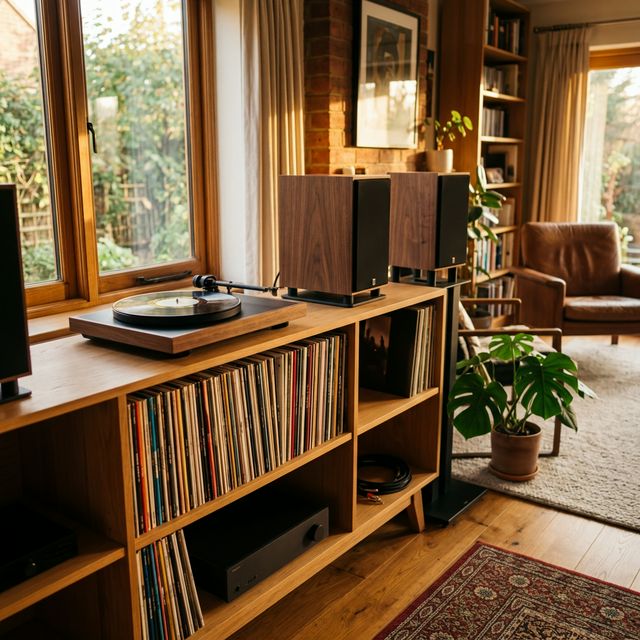

Hi-Fi audio equipment and vinyl records in a warm listening room Audio Quality
📅 March 22, 2026⏱️ 6 min read

Understanding Audio Quality: From MP3 to Lossless Hi-Fi Streaming

Not all audio is created equal. Learn the difference between lossy and lossless formats, what bitrate actually means, and when upgrading to Hi-Fi streaming is worth it for your setup.

Audio quality in music streaming is measured primarily by bitrate — the amount of data used per second of audio. Standard streaming typically uses Ogg Vorbis or AAC compression at around 128-256kbps, while high-quality streams reach 320kbps. But the real frontier is lossless audio, which preserves every detail of the original recording at 1,411kbps (CD quality) or higher.

The difference between lossy and lossless audio is subtle but significant. Lossy compression (MP3, AAC, Ogg Vorbis) removes audio data that the human ear is less likely to notice — frequencies masked by louder sounds, ultra-high harmonics, and spatial details. At 320kbps, the difference from lossless is nearly imperceptible on typical earbuds or laptop speakers.

However, with quality headphones or a dedicated audio system, the difference becomes apparent. Lossless FLAC or ALAC files preserve the full dynamic range, instrument separation, and spatial imaging of the original master. For critical listeners, this means hearing subtle details — the breath of a vocalist, the attack on a guitar string, the room tone of a live recording — that lossy formats flatten.

When deciding whether to upgrade, consider your hardware. If you are using the earbuds that came with your phone, 320kbps streaming will sound virtually identical to lossless. But if you have invested in quality headphones ($100+), a DAC (digital-to-analog converter), or bookshelf speakers, you will genuinely benefit from Hi-Fi streaming. The best approach is to try both and listen critically — use a song you know intimately, and pay attention to the details in the high frequencies and the clarity of the bass.

Person listening to music with headphones in nature at sunset Playlist Curation
📅 March 20, 2026⏱️ 4 min read

The Art of Playlist Curation: How to Build the Perfect Mix

Creating a great playlist is part science, part art. Learn the strategies professional curators use to create playlists that flow naturally, tell a story, and keep listeners engaged from start to finish.

A great playlist is more than a collection of songs you like — it is a curated experience that takes the listener on a journey. Professional playlist curators think about flow, energy, tempo, and emotional arc when assembling their mixes. Here is how you can apply the same principles to your personal playlists.

Start with a theme or mood. The best playlists have a clear identity: "Sunday morning coffee," "late night drive," "focused work session," or "summer cookout." This theme dictates not just the genre but the energy level, tempo range, and even the era of music you include. A playlist with a clear identity is more likely to be replayed and shared.

Pay attention to song transitions. Professional curators listen to how each song ends and how the next one begins. Avoid jarring transitions — a gentle acoustic track should not follow a heavy bass drop. Consider using your streaming service's crossfade feature (2-3 seconds works well) to smooth transitions. Some curators even organize songs by key, using tools like harmonic mixing to create seamless flows.

The energy arc matters more than individual song selection. A great playlist typically starts with medium energy to draw the listener in, builds to a peak in the second third, and then gradually winds down. This mirrors the emotional structure of a DJ set or a great album. For work playlists, maintain a consistent energy level — no sudden peaks or valleys that break concentration.

History of music technology from vinyl to digital streaming History
📅 March 18, 2026⏱️ 5 min read

The Evolution of Music: From Vinyl Records to AI-Curated Streaming

Trace the fascinating journey of music distribution — from Edison's phonograph to today's AI-powered streaming algorithms that know your taste better than you do.

The history of recorded music is a story of constant reinvention. In 1877, Thomas Edison's phonograph first captured sound on a tinfoil cylinder, forever changing humanity's relationship with music. Vinyl records dominated for nearly a century, then cassettes brought portability in the 1960s, and CDs delivered digital clarity in the 1980s.

The digital revolution truly began with MP3 compression in the 1990s, which made it possible to compress audio files to one-tenth their original size with acceptable quality loss. This enabled file sharing — and famously, Napster's peer-to-peer network in 1999 disrupted the entire music industry. Record labels scrambled to adapt, and Apple's iTunes Store (2003) proved that digital sales could work.

But it was streaming that fundamentally transformed the industry. When the first major streaming services launched in 2008, the premise was radical: unlimited access to millions of songs for a monthly subscription. Early skeptics questioned whether listeners would pay for access rather than ownership. They would — and in massive numbers. By 2020, streaming accounted for over 80% of music industry revenue globally.

Today, AI and machine learning power the streaming experience. Recommendation algorithms analyze listening patterns, tempo preferences, genre affinities, and even the time of day you listen to create personalized playlists. Features like AI DJ — which synthesizes a personalized radio experience with commentary — represent the next frontier. The question is no longer "what music exists" but "what music should I hear next," and AI is increasingly providing the answer.

Podcast listening and discovery guide for beginners Podcasts
📅 March 16, 2026⏱️ 4 min read

Podcast Discovery: How to Find Shows You'll Actually Love

With over 4 million podcasts available, finding great shows can feel impossible. Here's a practical framework for discovering podcasts that match your interests and listening habits.

The podcast ecosystem has exploded — from a niche medium in 2010 to over 4 million active shows in 2026. Major streaming platforms now integrate podcasts alongside music, making discovery easier but also more overwhelming. The key to finding great shows is understanding how podcast recommendation works and having a strategy.

Start with category browsing. Most platforms organize podcasts into categories like True Crime, Technology, Comedy, Business, and Health. Browse the top charts in categories that interest you — these lists are curated by editorial teams and surface quality shows. But don't stop there. The real gems are often found in "If you like X, try Y" recommendations that platforms generate based on your listening history.

Episode length matters more than most people realize. If your commute is 20 minutes, a 3-hour deep-dive interview podcast won't work for daily listening. Match podcast format to your available listening windows. Daily news briefings (10-15 min) work for morning routines. Interview and storytelling shows (30-60 min) suit commutes. Long-form deep dives (1-3 hours) are perfect for weekend walks or chores.

Finally, use social discovery. Share podcast episodes the way you share articles — on social media, in group chats, and in podcast communities. When friends recommend a show, add it to your queue immediately. The podcasts that stick are almost always the ones recommended by people whose taste you trust, not algorithm suggestions.

Music streaming for different occasions and moods Lifestyle
📅 March 14, 2026⏱️ 4 min read

Music for Every Moment: Choosing the Right Soundtrack for Your Day

Science shows that music affects productivity, mood, and even physical performance. Learn how to strategically choose music for work, exercise, relaxation, and social situations.

Music is not just entertainment — it is a performance enhancer. Research in neuroscience and psychology has repeatedly shown that the right music can improve focus, boost athletic performance, reduce anxiety, and enhance creativity. The key is matching the music to the task at hand.

For deep work and focus, studies recommend instrumental music at 50-80 BPM — slow enough to not distract but present enough to mask environmental noise. Lo-fi hip hop, ambient electronic, classical piano, and nature soundscapes are consistently rated as the most effective focus music. Avoid songs with lyrics in a language you understand, as your brain will instinctively try to process the words.

For exercise and physical activity, tempo is everything. Research from Brunel University found that music between 120-140 BPM increases endurance performance by up to 15%. The ideal approach is to match your playlist to your workout: 120 BPM for jogging, 130-140 BPM for high-intensity interval training, and 80-100 BPM for stretching and cool-down. Many streaming services now offer workout playlists automatically paced to your running cadence.

For relaxation and wind-down, choose music with slow tempo (60-80 BPM), minimal dynamic range, and soothing timbres. Ambient music, solo piano, acoustic guitar, and nature sounds are effective. Sleep-specific playlists are designed with tracks that gradually slow in tempo and reduce in volume, gently easing you toward rest.

Home audio setup guide for music streaming Technology
📅 March 12, 2026⏱️ 5 min read

Building the Perfect Home Audio Setup for Music Streaming

From Bluetooth speakers to audiophile-grade DACs, here's how to build a home audio system that makes the most of your streaming subscription — at any budget.

Your streaming service is only as good as the hardware playing it. A premium subscription sounds no better than the free tier through cheap earbuds. But you don't need to spend thousands to dramatically improve your listening experience. Here is a guide to building the right setup at three budget levels.

At the entry level ($50-150), a quality pair of wired headphones or a Bluetooth speaker will transform your experience. Look for headphones with at least 20Hz-20kHz frequency response and Bluetooth speakers with aptX or LDAC codec support. These codecs transmit higher-quality audio wirelessly than standard Bluetooth SBC. Popular options include well-reviewed models from established audio brands.

At the mid-range level ($150-500), add a DAC (digital-to-analog converter) between your device and headphones or speakers. Your phone's built-in DAC is designed for efficiency, not quality. An external DAC can dramatically improve clarity, soundstage, and bass response. Pair it with open-back headphones for the most natural sound, or bookshelf speakers for room-filling audio.

At the audiophile level ($500+), consider a dedicated streamer (a device designed exclusively for music streaming), a high-end DAC, and a headphone amplifier or integrated amplifier with passive speakers. This setup bypasses the limitations of phone and computer audio entirely, delivering studio-quality playback from your streaming service. At this level, lossless streaming subscriptions become essential — there is no point in premium hardware processing lossy audio.

Family music streaming guide with parental controls Family
📅 March 10, 2026⏱️ 4 min read

Family Music Streaming: Parental Controls, Kids' Content & Shared Plans

Managing music access for children while keeping costs down. A practical guide to family plans, content filtering, explicit content controls, and age-appropriate music discovery.

Family plans are the most cost-effective way to give everyone in your household access to streaming, with most services offering plans that support 4-6 accounts at a significant discount compared to individual subscriptions. But price is only part of the equation — parental controls and content management are essential.

Most major streaming services now offer explicit content filters that can be enabled per account. These filters block songs with explicit lyrics from appearing in search results, playlists, and recommendations. Some services go further with dedicated kids' profiles that curate age-appropriate content — children's music, educational podcasts, and family-friendly playlists.

Shared playlists are a great way to bond over music as a family. Create a collaborative playlist where everyone can add songs — it becomes a living document of your family's musical taste. Some families create themed playlists for road trips, cooking together, or weekend cleaning sessions. The key is making music a shared activity rather than individual consumption.

For managing data usage, configure each family member's download and streaming quality settings appropriately. Kids' accounts can be set to standard quality (128kbps) which uses less data and storage, while adult accounts can retain high quality settings. Most services also allow setting a download limit per device to prevent children from filling up your phone's storage.

Music discovery algorithms and recommendation systems explained AI & Algorithms
📅 March 8, 2026⏱️ 5 min read

How Music Recommendation Algorithms Actually Work

Ever wonder how streaming services seem to know exactly what you want to hear? Dive into the technology behind collaborative filtering, natural language processing, and audio analysis.

Music recommendation engines are among the most sophisticated AI systems in consumer technology. They combine three primary approaches: collaborative filtering, natural language processing (NLP), and raw audio analysis. Together, these create the remarkably accurate "Discover Weekly" and "Daily Mix" playlists that millions rely on.

Collaborative filtering is the oldest and most straightforward approach. It finds users with similar listening patterns and recommends what they listen to that you haven't heard yet. If 10,000 people who love the same 50 songs as you also listen to artist X, you'll likely enjoy artist X too. This approach is powerful but has a cold-start problem — new songs with few listeners don't get recommended.

Natural Language Processing analyzes text about music across the internet — blog posts, reviews, social media, forum discussions, and lyrics. By understanding the words people use to describe music, the algorithm creates rich descriptive profiles for songs and artists. A song described as "dreamy," "atmospheric," and "introspective" gets linked to similar-sounding descriptors, even if the artists share no listeners in common.

The most fascinating approach is raw audio analysis. Convolutional neural networks analyze the actual audio waveform of every track, identifying features like tempo, key, time signature, instrumentation, dynamic range, and even "danceability." This means the algorithm can recommend songs based on how they sound, not just how they're categorized or who else listens to them. It is particularly powerful for niche and underground music that lacks sufficient listening data or critical writing.

Comparing music streaming services and plans in 2026 Comparison
📅 March 6, 2026⏱️ 6 min read

Music Streaming Services Compared: Which One Is Right for You?

An objective comparison of major music streaming platforms — features, audio quality, pricing, and ecosystem integration. Find the service that matches your priorities.

Choosing a music streaming service in 2026 is no longer just about the music library — every major platform now offers over 100 million tracks. The real differentiators are audio quality options, recommendation algorithms, social features, podcast integration, and ecosystem compatibility.

Audio quality leaders stand out by offering lossless (CD quality, 1,411kbps) and even hi-res (up to 9,216kbps) streaming. Not all services include these options in their standard tier — some require premium upgrades. If audio quality is your priority, compare the specific codecs and bitrates offered at each subscription level.

Discovery and recommendations vary significantly between platforms. Some services are renowned for their algorithmic personalization—daily mixes, weekly discoveries—while others emphasize human-curated editorial playlists. If finding new music matters to you, test the recommendation algorithms by using each service's trial period and comparing the quality of suggestions after a week of listening.

Ecosystem integration is often the deciding factor in practice. If you own a particular brand of smart speaker, phone, or smartwatch, check which streaming services offer native integration. Seamless voice control, offline sync, and multi-room audio often work better with the platform designed for your device ecosystem. The "best" service is ultimately the one that integrates smoothly into your daily life.

Music and mental health benefits, therapeutic listening guide Wellness
📅 March 4, 2026⏱️ 4 min read

Music & Mental Health: The Science of Therapeutic Listening

Research shows music can reduce anxiety by up to 65%, improve memory, and even aid physical recovery. Explore the neuroscience behind why music is one of the most powerful therapeutic tools available.

Music therapy is one of the oldest healing practices in human history, and modern neuroscience is finally explaining why. When you listen to music, your brain releases dopamine — the same neurotransmitter associated with eating food and social bonding. A 2023 study in the Journal of Neuroscience found that music activates every known area of the brain simultaneously, a feat achieved by no other human activity.

For anxiety reduction, a landmark study by Mindlab International found that listening to certain types of music reduced participants' overall anxiety by up to 65% and physiological resting rates by 35%. The most effective anxiolytic music features a sustained tempo of 60 BPM, which the brain synchronizes with, gradually lowering heart rate through a process called entrainment.

Music and memory share a deep neurological connection. Music is processed in the same brain regions as autobiographical memory, which is why a song can instantly transport you to a specific moment in time. This connection is therapeutically significant — music therapy has shown remarkable results in patients with Alzheimer's disease, temporarily restoring memories and emotional connections that seemed lost.

For daily mental health maintenance, consider creating intentional listening rituals. A 10-minute morning session with uplifting music can set a positive tone for the day. A midday break with calming instrumental music can reset focus and reduce accumulated stress. An evening wind-down playlist with slow, ambient music prepares the mind for rest. The key is consistency — like exercise, music therapy's benefits compound with regular practice.

Future of music streaming technology and spatial audio Future Trends
📅 March 2, 2026⏱️ 5 min read

The Future of Music: Spatial Audio, AI Composition & What's Next

From Dolby Atmos spatial audio to AI-generated music and blockchain royalty systems — explore the technologies reshaping how we create, distribute, and experience music.

Spatial audio is the biggest evolution in music listening since the transition from mono to stereo. Technologies like Dolby Atmos Music and Sony 360 Reality Audio create immersive three-dimensional soundscapes, placing instruments and vocals around, above, and behind the listener. Rather than hearing music from two speakers (left and right), spatial audio creates the sensation of being inside the music.

The impact on common genres is profound. In a spatial audio mix of an orchestral piece, you can hear individual instruments placed in their actual orchestral positions — first violins to the left, cellos to the right, brass from the back, and percussion overhead. For electronic music, producers are creating entirely new spatial experiences, with synthesizer elements orbiting the listener and bass drops that feel physically enveloping.

AI-generated music represents both an opportunity and a challenge. Models can now compose original music in virtually any style, generating royalty-free background tracks for content creators. More ambitiously, AI tools are enabling non-musicians to create professional-quality compositions by describing what they want in natural language. This raises profound questions about creativity, copyright, and the economic model of music.

Looking further ahead, blockchain-based royalty systems promise to revolutionize how artists are compensated. Smart contracts could automatically split streaming revenue in real-time among all contributors — songwriter, performer, producer, engineer — without the delays and opacity of current systems. Combined with NFTs that could give fans ownership stakes in songs, the relationship between artists and listeners may fundamentally change in the coming decade.

6 Essential Tips for Better Music Streaming

Quick, practical advice to enhance your listening experience right away.

🎧

Invest in Good Headphones

Quality headphones make a bigger difference than any premium subscription. Even a $50 pair of well-reviewed wired headphones will dramatically improve your experience over stock earbuds.

📥

Download for Offline

Pre-download playlists on Wi-Fi before traveling. This saves mobile data, prevents buffering, and ensures uninterrupted playback on flights, subways, and areas with poor coverage.

⚙️

Maximize Audio Quality

Go to Settings → Audio Quality and set both streaming and download quality to "Very High" or "Lossless." Most people use the default medium quality without realizing they're missing clarity.

🔀

Use Crossfade

Enable crossfade (3-4 seconds) in settings for seamless transitions between songs. This eliminates awkward silences and creates a professional DJ-like listening flow.

👍

Train the Algorithm

Like songs you enjoy and hide songs you don't. The more feedback you give, the better your personalized recommendations become. It takes about 2 weeks of active engagement to see dramatic improvement.

📱

Explore Social Features

Follow friends to see what they're listening to. Share songs and collaborate on playlists. Music discovery through trusted personal connections is consistently rated as more satisfying than algorithms alone.

Music Streaming Through the Seasons

How listening habits change throughout the year and the best music for every season.

🌸

Spring

March – May

Spring calls for fresh, uplifting music. Indie pop, new album releases, and outdoor playlists dominate. It's the best time to reset your music library — unfollow stale playlists and discover new artists. Festival season announcements spark playlist trends.

☀️

Summer

June – August

High-energy anthems, tropical house, reggaeton, and feel-good pop rule the summer charts. Build road trip playlists, pool party mixes, and outdoor workout soundtracks. Major album drops target this peak listening season.

🍂

Autumn

September – November

Listening shifts toward introspective, atmospheric music. Indie folk, acoustic, and electronic ambient see a spike. It's the ideal season for long album listens, podcast deep dives, and curating cozy evening playlists.

❄️

Winter

December – February

Holiday playlists, year-end wrapped reviews, and retrospective listening define winter. Jazz, classical, and lo-fi are popular for cozy indoor sessions. January brings fresh starts — many listeners reset their taste profiles and explore new genres.

Frequently Asked Questions

Free tiers typically include ads between songs, shuffle-only playback on mobile, lower audio quality (128kbps), and no offline downloads. Paid subscriptions remove ads, unlock on-demand playback, offer higher quality audio (up to 320kbps or lossless), and enable offline downloads. Most services offer family and student plan discounts.

Not necessarily. You can notice a clear difference between 128kbps and 320kbps on most decent earbuds ($30+). However, the difference between 320kbps and lossless primarily becomes apparent with headphones in the $100+ range or dedicated audio equipment. A good rule of thumb: if you can hear the difference, invest in better audio; if you can't, save your money.

At low quality (96kbps), roughly 43MB per hour. At normal quality (160kbps), about 72MB per hour. At high quality (320kbps), approximately 144MB per hour. Lossless streaming uses about 635MB per hour. To minimize data usage, download playlists on Wi-Fi for offline listening or adjust streaming quality in your app settings.

Yes, several third-party tools can transfer playlists between services. Popular options include TuneMyMusic, Soundiiz, and FreeYourMusic. These tools match songs by title and artist across platforms. Transfer success rates are typically 90-95%, with some songs unavailable on certain platforms due to licensing differences.

No. Digital Music Journal is an independent editorial publication. We are not affiliated with, endorsed by, or connected to any music streaming service, record label, or technology company. Our content is based on independent research and editorial expertise.

We update our articles regularly to reflect changes in the streaming landscape — new features, pricing updates, and technology developments. Most articles are reviewed and updated at least quarterly. Our comparison articles are updated whenever a major service announces significant changes.